Ceramic bowls shape the way a tabletop feels. Across these images, curved rims frame fruit, spices, tea tools, and small arrangements, while handmade surfaces catch light with subt
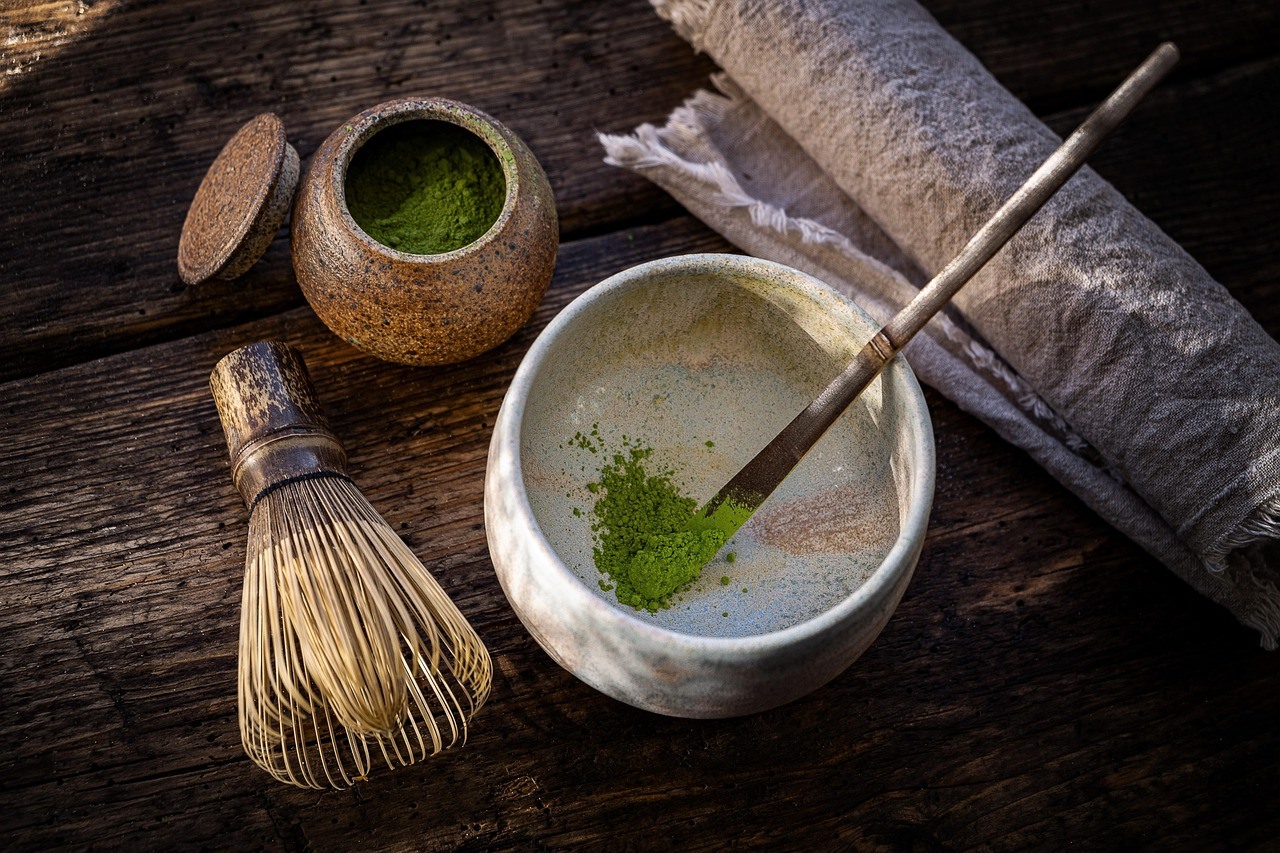
A pale ceramic tea bowl with green powder sits beside a whisk, scoop, cloth, and textured containers on dark wood.
A pale ceramic bowl anchors a measured arrangement of tea tools on a dark wooden surface. Its broad opening reveals traces of green powder and a slender scoop resting diagonally across the rim. Nearby, a bamboo whisk spreads into a dense bundle of fine lines, contrasting with the bowl’s smooth interior. A lidded container, folded cloth, cylindrical object, and small textured piece extend the scene without crowding its center. The subdued brown, gray, and cream palette makes the green powder especially distinct. Light moves gently across the glaze, revealing speckles and slight tonal variation rather than a uniform finish. Each object occupies its own pocket of space, and the diagonal utensils keep the otherwise quiet tabletop from feeling static.
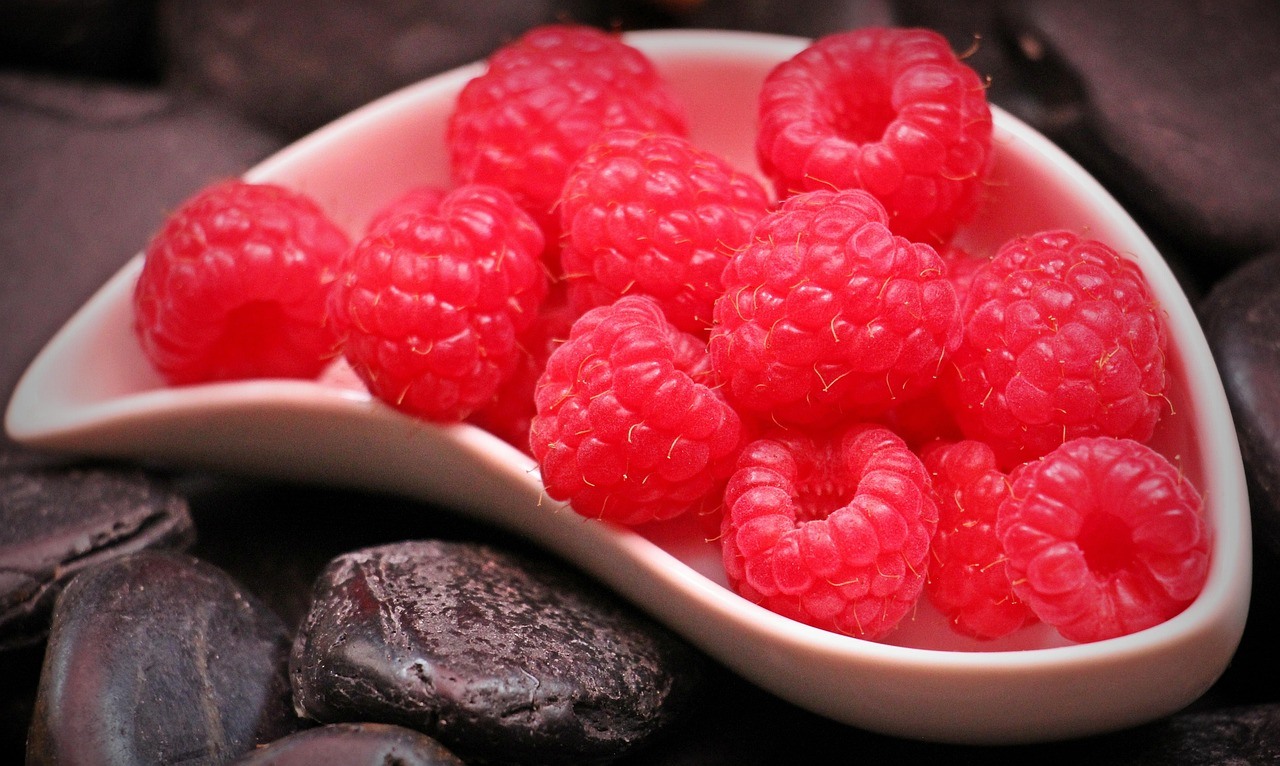
A pale pink ceramic bowl filled with red raspberries beside dark stones on a deep brown surface.
The bowl’s pale blush surface creates a gentle boundary for the saturated red raspberries. Its rounded body narrows into a pointed, spoon-like extension, giving the vessel an asymmetrical silhouette that contrasts with the fruit’s clustered circles. Soft light glances across the rim and reveals a smooth finish, while the berries supply a dense pattern of small cells and highlights. Dark stones sit close to the bowl, lowering the surrounding value and making both vessel and fruit appear more luminous. The composition depends on close cropping and shallow depth, so the bowl feels intimate rather than architectural. Here, ceramic form works as a quiet frame: low enough to keep the contents visible, yet distinct enough to shape the entire arrangement.
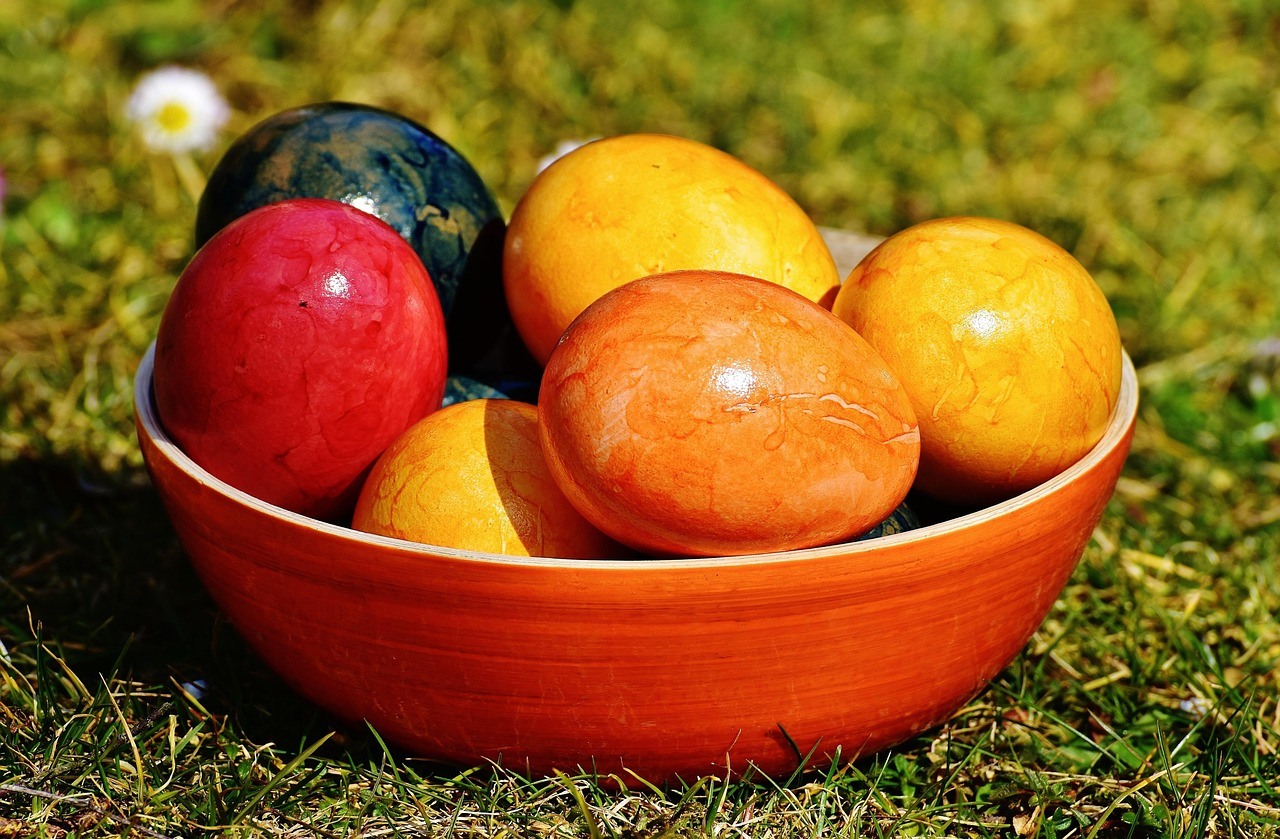
A wide orange ceramic bowl holds glossy colored spheres on sunlit grass.
A broad orange bowl sits directly on grass, holding a group of glossy spheres in red, yellow, orange, and dark blue-green. The vessel’s low, outward-curving wall keeps every object visible and creates a strong horizontal base beneath their rounded forms. Sunlight produces sharp highlights on the spheres and reveals mottled color across their surfaces. The bowl carries its own subtle tonal variation, shifting from deep red-orange near the base to brighter orange along the rim. Grass and a small white flower establish an outdoor setting, adding fine organic texture around the smoother objects. Repeated circles dominate the composition, from the bowl’s opening to the individual spheres, while the varied sizes and colors keep the arrangement from becoming mechanically regular.